
Columbia University is an Ivy League university known for its rigorous Core Curriculum, its location in New York City, and strong programs in Computer Science, Economics, Political Science, and Psychology. It’s also recognized for a generous need-blind, no-loan financial aid policy and a holistic admissions process that looks beyond test scores.
Many students know about Columbia University, but what is Columbia University known for outside of its prestigious Ivy League reputation? From its historic traditions to its integration with New York City, Columbia offers students an undergraduate experience that is both academically rigorous and filled with vibrant culture and unique opportunities.
Ready to start your application? Read our guide on writing the Columbia supplemental essays to make sure your essays reflect the intellectual curiosity Columbia looks for.
The Most Notable Academic Programs at Columbia University

While Columbia’s Core Curriculum shapes every student’s experience, in choosing your major, there for a few undergrad programs that stand out:
Computer Science
As the most popular major at Columbia, the Computer Science major offers a perfect blend of Ivy League theory and hands-on experience. Students can apply through the College or Engineering School, and are offered specialized tracks such as Cybersecurity or AI.
Due to its location in “Silicon Alley,” Columbia students have the added bonus of having NYC as their campus, with corporations such as Google and Amazon regularly having internship opportunities for students; it’s common for students to intern at a major firm in the morning, and then attend class seminars in the afternoon.
Columbia is known for blending prestigious academics with the fast-paced New York tech scene, offering numerous opportunities for students to gain real-world experience alongside their studies.
Economics
Economics at Columbia is consistently ranked as one of the top three most-enrolled programs, and aims to challenge its students into becoming analytical thinkers while working to understand global economic issues with data and logic.
Columbia is also known for offering students joint majors in economics, allowing them to pair Economics with Political Science, Math, Philosophy or Statistics.
Columbia’s Center for Career Education also provides students with easy access to internships in management consulting and investment banking, and since Wall Street is a simple train ride away, Economics majors enjoy both a top-tier education as well as building a strong professional network that is hard to beat.
Political Science
Columbia University is known for its Political Science program, a staple of the Columbia experience. Attracting hundreds of new majors every year, Columbia’s Political Science program isn’t simply about learning history and process, it’s about active participation in domestic and international politics.
Oftentimes, students’ professors are also professionals working with the United Nations, allowing for first-hand knowledge and real-world experiences to take center stage within the classroom.
Students interested in the major have a variety of topics to focus on, from American Foreign Policy to Middle Eastern politics. Columbia is known for its deep connections to global policy, and is a gold standard for future lawyers and diplomats.
Psychology
Psychology is one of the top-five favorite majors for undergraduate students at Columbia, and unlike other programs that may mostly focus on theory, Columbia’s Psychology program treats the subject as a rigorous lab science.
Students are encouraged to join research labs as early as their first semester, and can study multiple topics such as memory, cognition, and social behavior.
For students who are interested in pursuing a career in clinical psychology, medicine, or behavioral economics, Columbia is a perfect fit for curious minds who want to design their own experiences and participate in research presentations, even before they graduate.
What Makes Columbia University Stand Out?
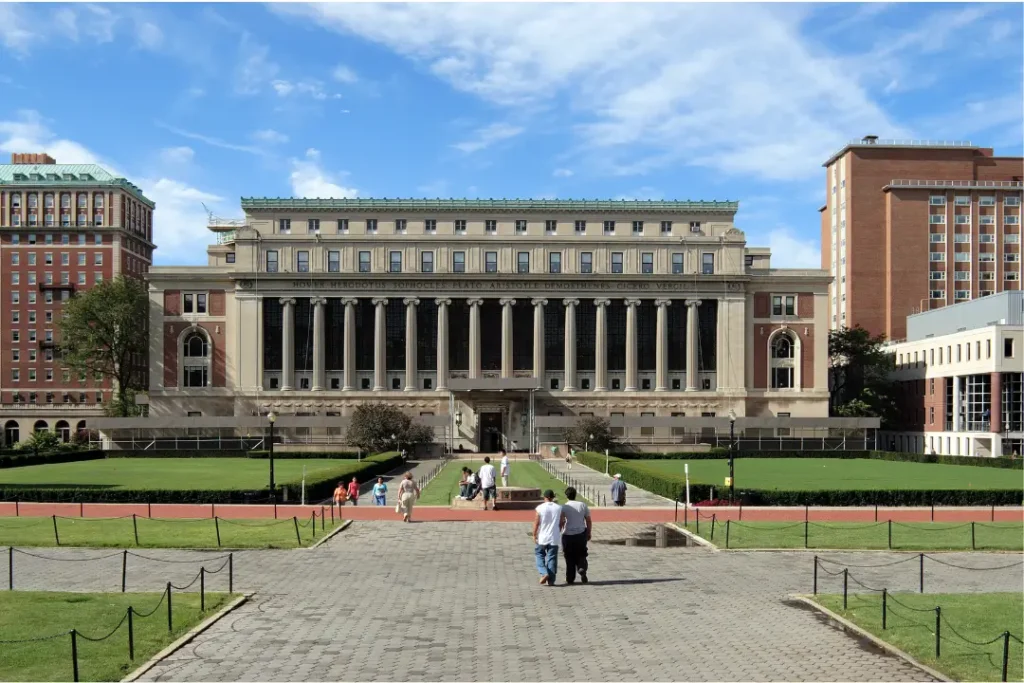
Beyond its academic departments, Columbia has built a reputation around a few defining features that shape campus life just as much as any major.
Core Curriculum
Perhaps the one thing that defines what Columbia University is known for, the Core Curriculum is a centuries-old academic tradition that sets Columbia apart from other universities. Unlike most colleges where students complete a General Education requirement, Columbia students take a specific set of shared courses.
Columbia’s Core Curriculum focuses on small, discussion-based seminars where students and their professors analyze and debate information and materials in a group setting, rather than traditional lecture-based courses.
The Core curriculum ensures that graduates of Columbia University aren’t just experts in their chosen field, but are well-rounded critical thinkers who can write, analyze, and view the world with a global lens, building a foundation for intellectual pursuits and leadership.
NYC As a Campus and Living Laboratory
Columbia’s location and “city as your campus” philosophy is a major part of the overall qualities of what Columbia is known for; Columbia offers a traditional, self-contained campus that is integrated into the greater landscape of New York City.
This positioning provides students with a distinct competitive advantage, turning a global capital of finance, tech, and media into an extension of the classroom.
For students, this translates into unique access to professional opportunities, and it’s common for undergraduates to balance between classes and internships throughout their studies.
Financial Aid Packages
Columbia operates on a need-blind admissions basis for students, so a family’s financial situation won’t impact chances of acceptance.
The core of Columbia’s financial program, however, is their no-loan policy: this means that if a student qualifies for aid, their financial award will consist only of grants and student work opportunities instead of racking up debt through loans.
For families, this makes an Ivy League education much more affordable; currently, families with assets and incomes below $150,000 can attend tuition-free, and those earning less than $66,000 often have the entire cost of attendance covered.
Columbia is known for attracting top-notch students, and this approach ensures that the brightest minds can attend, regardless of economic background.
What Does Columbia Look Like for Applicants?
Understanding what Columbia looks for starts with understanding how the university itself is structured, and what that means for how you apply.
Three Schools
Although many students think of Columbia as a single school, Columbia University is actually comprised of three undergraduate colleges: Columbia College (traditional liberal arts), Fu Foundation School of Engineering and Applied Science (SEAS), and Columbia University School of General Studies (non-traditional/transfer students/dual degrees).
First-year students will apply to either Columbia College or SEAS depending on their intended major, with Columbia College students diving into the humanities and SEAS students following a more “technical” Core.
| School | Type | Best For |
|---|---|---|
| Columbia College | Traditional liberal arts | Students focused on the humanities and social sciences |
| Fu Foundation School of Engineering and Applied Science (SEAS) | Engineering and applied science | Students pursuing a more technical Core curriculum |
| School of General Studies | Non-traditional, transfer, and dual-degree programs | Returning students, transfers, and dual-degree candidates |
Holistic Review
Columbia’s admissions process is holistic, meaning they won’t only consider a student’s test scores or GPA. What stands out most to Columbia admissions officers is curiosity: they want to see how a student engages with their community and how they will contribute to the discussion-based and seminar-style of learning within the Core Curriculum.
Columbia is specifically looking for the right “fit,” so students should utilize their supplemental essays to show that they’re ready for the intellectual rigor Columbia is known for.
Columbia University FAQs
Does Columbia Consider Demonstrated Interest?
Columbia does not track demonstrated interest at this time.
Is Columbia Test-Optional?
Columbia was one of the first Ivies to go test-optional, and it has maintained that policy.
What are the Median GPA and Test Scores for Admitted Freshman Applicants?
Currently, the median academic metrics for freshman applicants are:
Median SAT Range: 1520-1560
Median ACT Range: 34-36
Median GPA: Most students are ranked in the top 10% of their graduating class, and most successful applicants maintain an unweighted 3.9 or higher GPA.
Conclusion
Students applying to Columbia are applying to more than just a stand-out name; they’re joining a community that values both intellectual curiosity and real-world impact.
Students share the bond created throughout Columbia’s Core Curriculum tradition and are prepared to lead in a complex and fast-paced world, with numerous opportunities for networking and internships throughout their undergraduate careers.
Columbia University is known for its intersection of tradition and unique opportunity, and students are most successful when they embrace the “city as your campus” mindset throughout their studies.
Still deciding if Columbia if the right for you? Schedule a free consultation with a HelloCollege expert to learn more about building a college to both maximize your options and find the best possible fit.