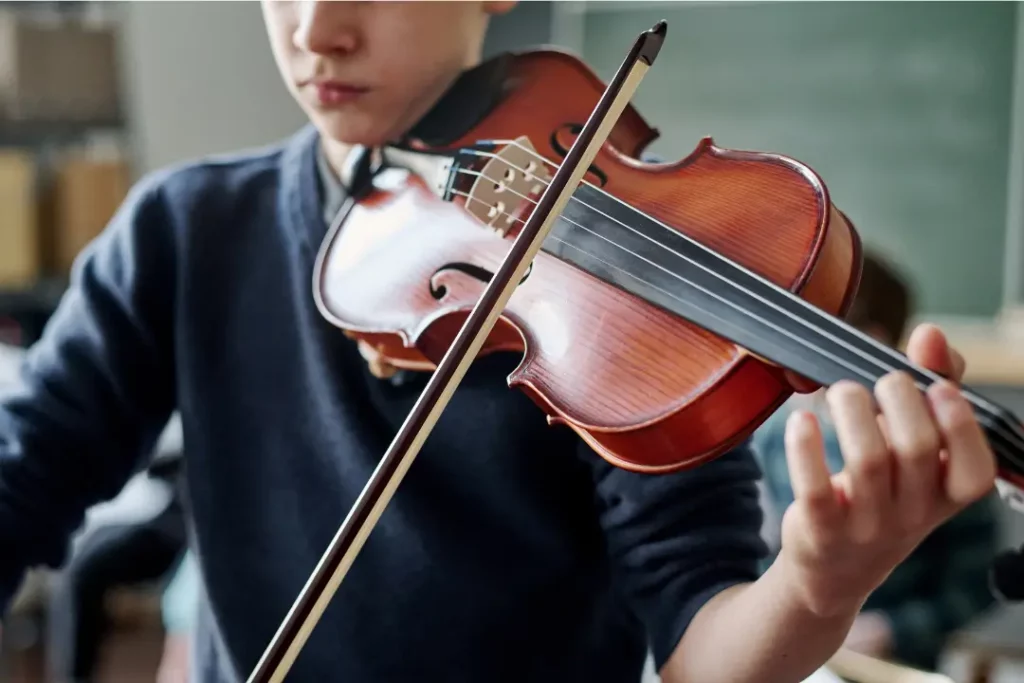
The best colleges for music in the US are Curtis, Juilliard, Eastman, Rice’s Shepherd School, Oberlin, Northwestern’s Bienen School and Indiana’s Jacobs School. The choice that matters more than the ranking is conservatory or university, because it decides how much of your week is music. Most require a prescreening recording by December 1.
I have worked with music applicants for years, and the students who end up happiest are almost never the ones who chased the most famous name. They are the ones who worked out what they wanted their week to look like, then found the school built for it.
That is a harder question than it sounds. A violinist headed for orchestral work and a songwriter headed for Nashville should be looking at different lists, and neither list is the one that ranks highest.
What to Look For in a College Music Program
Before any ranking, get clear on six things. They matter more here than in almost any other major, and they overlap with the factors that matter when choosing any college.
- Your specialization. Performance, composition, education, production, business and therapy are genuinely different degrees with different faculty.
- The kind of training. Classical, jazz and contemporary programs can sit inside the same school and feel like different institutions.
- Performance opportunities. Ask how often an undergraduate actually plays, and whether graduate students get the solos first.
- Where you want to work. Music careers are built on local networks. Nashville, Los Angeles and New York feed different industries.
- The college experience you want. A conservatory is not a smaller version of a university. It is a different life.
- Cost against aid. Conservatory sticker prices are high and aid varies wildly. Curtis is tuition-free for every admitted student. Start with our post on colleges that give the most merit aid.
Conservatory or University Music School?
A conservatory is music almost all of the time, with a small cohort, a high performance standard and lighter academic requirements. A university music school gives you the same training inside a full college, with other majors around you and the option to change your mind.
The tradeoff is attention. At a conservatory nothing competes with your instrument. At a university, something always does, and for some students that is the point rather than the problem.
Two useful middle paths. Oberlin runs a double-degree program that pairs the conservatory with the college. Rice, Northwestern and Indiana are conservatory-grade schools that sit inside research universities, so you get the training without giving up the campus.
The Top 10 Music Schools in the US at a Glance
| # | School | Type | University rate | Music school rate |
|---|---|---|---|---|
| 1 | The Juilliard School | Conservatory | Standalone | 9% |
| 2 | Curtis Institute of Music | Conservatory | Standalone | 4% |
| 3 | Manhattan School of Music | Conservatory | Standalone | 41% |
| 4 | Shepherd School, Rice | In a university | 8% | About 15% |
| 5 | Mannes, The New School | In a university | 63% | About one third |
| 6 | Boston Conservatory at Berklee | Conservatory | 44% Berklee-wide | Not published |
| 7 | Eastman, U. of Rochester | In a university | 42% | Not published |
| 8 | Oberlin Conservatory | Conservatory + college | 34% the college | 26% |
| 9 | Bienen, Northwestern | In a university | 7.4% | Not published |
| 10 | Jacobs, Indiana University | In a university | 78% | Not published |
Every figure comes from the institution’s own reporting or federal IPEDS data.
The 10 Best Colleges for Music in the US
The Juilliard School (New York, NY) – The name everyone knows, and it earns it in classical, jazz and contemporary performance. Small studios, faculty who are working professionals in the city, and an alumni network that opens doors for a career. The audition is the application, and it is unforgiving.
Curtis Institute of Music (Philadelphia, PA) – The most selective music school in the country at roughly 4%, and every admitted student attends tuition-free. Curtis admits to fill an orchestra, so in a year when it does not need your instrument, an extraordinary player can be turned away. Apply, but never plan around it.
Manhattan School of Music (New York, NY) – Conservatory rigor with the whole city as a rehearsal space, and real strength in classical, jazz and musical theater. More attainable than Juilliard at around 40%, with much of the same professional access.
Shepherd School of Music, Rice University (Houston, TX) – A conservatory-grade school inside a small research university, known for orchestral performance, opera and chamber music. Undergraduate cohorts are tiny, so students play constantly rather than waiting behind graduate students.
Mannes School of Music, The New School (New York, NY) – Classical training with a collaborative, contemporary approach and access to the rest of The New School. A good fit for a student who wants the tradition but not the hierarchy that sometimes comes with it.
Boston Conservatory at Berklee (Boston, MA) – Since the merger with Berklee, one of the few places a student can sit between classical, contemporary and musical theater without transferring. Strongest choice on this list for musical theater.
Eastman School of Music, University of Rochester (Rochester, NY) – Conservatory-level performance, composition and pedagogy with a full university behind it. Eastman produces an unusual number of music educators, so it belongs on the list for anyone considering teaching.
Oberlin Conservatory of Music (Oberlin, OH) – The double-degree program is the reason to look here. Five years, a Bachelor of Music and a Bachelor of Arts, and a genuine liberal arts education alongside conservatory training. For a student who is serious about music and unwilling to be only a musician, there is nothing quite like it.
Bienen School of Music, Northwestern University (Evanston, IL) – Top-level performance, composition and musicology in a university that would be a reach on academics alone. Chicago Symphony musicians on the faculty and a city forty minutes away..
Jacobs School of Music, Indiana University (Bloomington, IN) – One of the largest music schools in the country, and the scale is the argument. Seven full opera productions a year, faculty depth in almost every area, and public university pricing. Scale cuts both ways, so ask how an undergraduate gets seen. Students often pair it with our college list builder to compare it fairly against smaller programs.
Conservatory or university?
Not sure whether a conservatory or a university is the better fit for you?
Our College Fit Program works through exactly this with music students.
Explore the College Fit ProgramMore Top Music Programs With Higher Acceptance Rates
A list of ten leaves out excellent programs, and several of these are easier to get into without being easier to succeed in. The same logic applies here as in our post on strong colleges with higher acceptance rates..
Berklee College of Music (Boston, MA) – 44% institution-wide. The default for contemporary, songwriting and music business.
Peabody Institute, Johns Hopkins University (Baltimore, MD) – Conservatory training with a research university attached. Hopkins admits 6% overall, but Peabody applicants are folded into that figure, so it is not Peabody’s rate and Peabody does not publish one.
Thornton School of Music, University of Southern California (Los Angeles, CA) – USC is 12% overall; Thornton does not publish its own. Unmatched for anyone headed into the LA industry.
School of Music, Theatre & Dance, University of Michigan (Ann Arbor, MI) – Michigan is 16% overall. Deep across performance, education and musical theater.
Belmont University School of Music (Nashville, TN) – 94% overall, but the music programs audition. Nashville, and the industry connections that come with it.
Herb Alpert School of Music, UCLA (Los Angeles, CA) – 24% for the music school itself, against 9.4% for UCLA overall. One of the few schools that publishes both. Strong ethnomusicology and jazz at public pricing.
Setnor School of Music, Syracuse University (Syracuse, NY) (Syracuse 46%) and Boyer College, Temple (Philadelphia, PA) (Temple 86%). Solid, well-funded, and far more attainable on the academic side.
Boyer College of Music and Dance, Temple University (Philadelphia, PA) – 59%
Offers excellent programs in performance, jazz, and music education, all in the culturally rich city of Philadelphia.
The Hartt School, University of Hartford (Hartford, CT) and Ithaca College School of Music, Theatre, and Dance (Ithaca, NY). Both send a high share of graduates into music teaching. Both audition, so the university rate overstates your odds considerably.
Tips for Applying to College for Music
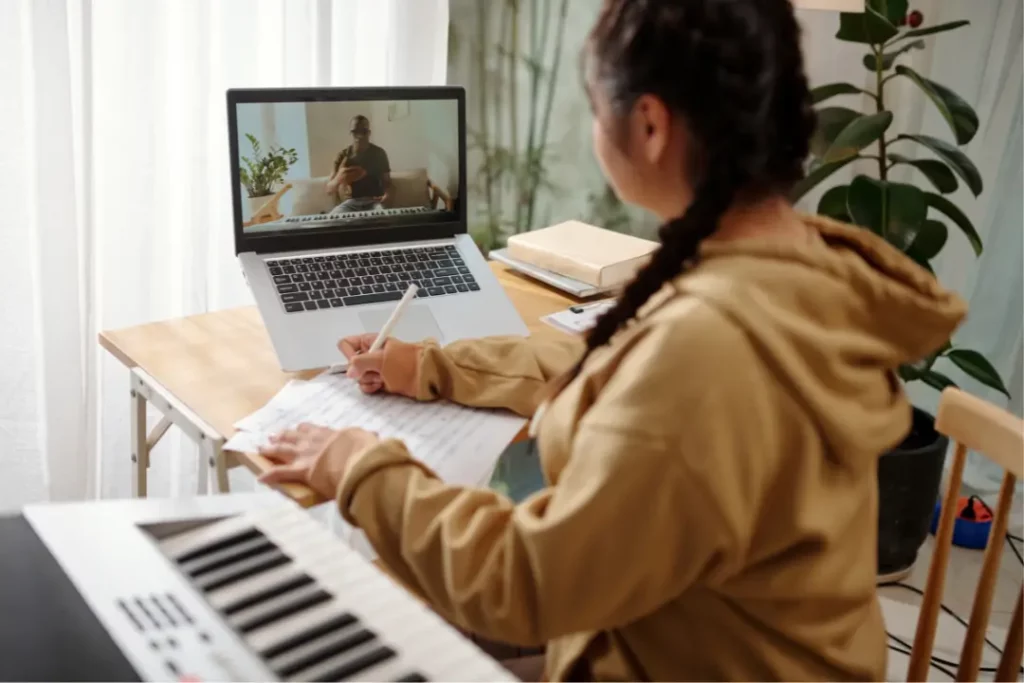
- Start early. Music programs have more steps in the application process than the average college major, including prescreening uploads, and auditions, so you want to get started as early as you can to make sure you get everything in on time and get first pick of audition dates. Some programs will require you to meet the early action deadline because of the additional steps so keep an eye out for that so you do not miss the deadline to apply.
- Secure strong recommendations. Make sure you have multiple people who can speak well to your musical ability and work ethic.
- Secure a mentor to prepare for recordings/auditions. Make sure you have a music teacher or someone else in the music industry to help you choose your pieces, build a portfolio (often required for composition or production), and rehearse with you.
- Write a strong music resume, essays, and/or artistic statement. Many colleges will have a written component to your application or prescreening, including but not limited to a music resume, supplemental essays, or artistic statement. Be sure to have someone help you write and edit these documents to make sure they are perfect. Need help with this? Connect with one of our college advisors to learn more about services at HelloCollege!
Conclusion
There is no single best college for music. There is the one that fits the musician in front of it, and finding it is the work of building a college list honestly rather than aspirationally.
What I tell families is that a music degree is four years of doing the thing, not four years of preparing to do it. Pick the place where you will play the most, be pushed the hardest, and be known by the people teaching you. That is rarely the school with the best ranking, and it is always the school with the right studio.
Start with our free college application tracker to keep prescreen and audition dates in one place, or book a free consultation and we will work through your list together.
FAQs About the Best Colleges for Music
What is the best music school in the US?
Curtis and Juilliard are the two most selective and most cited. Curtis admits roughly 4% of applicants and charges no tuition. Which is better depends entirely on your instrument, because studio faculty matter more than institutional reputation.
What are the top 10 music schools in the US?
Juilliard, Curtis, Manhattan School of Music, Rice Shepherd, Mannes, Boston Conservatory at Berklee, Eastman, Oberlin, Northwestern Bienen and Indiana Jacobs. Six are standalone conservatories and four sit inside universities.
What are the best colleges for music education?
Eastman, Indiana Jacobs, Michigan, Ithaca and Hartt all place a high share of graduates into teaching. Check your state’s licensure requirements first, since certification does not transfer automatically across state lines.
What are the best colleges for music production and engineering?
Berklee, USC Thornton, NYU Steinhardt, Michigan’s Performing Arts Technology program and Belmont. These are closer to engineering degrees than to performance degrees, and they usually want a portfolio rather than an audition.
What are the best liberal arts colleges with strong music departments?
Oberlin, Lawrence, St. Olaf, and Bard college all have lauded and highly-ranked music programs, with some schools, like Oberlin, offering a conservatory-like experience within a liberal arts college setting.
Do music programs require auditions?
Most conservatories and university music programs require live or recorded auditions, while many music-related majors (like business or production) require portfolios instead.
Is a conservatory or a university better for music?
A conservatory if you are certain and want nothing competing with your instrument. A university if you want the training without closing other doors. Oberlin, Rice, Northwestern and Indiana offer versions of both.